



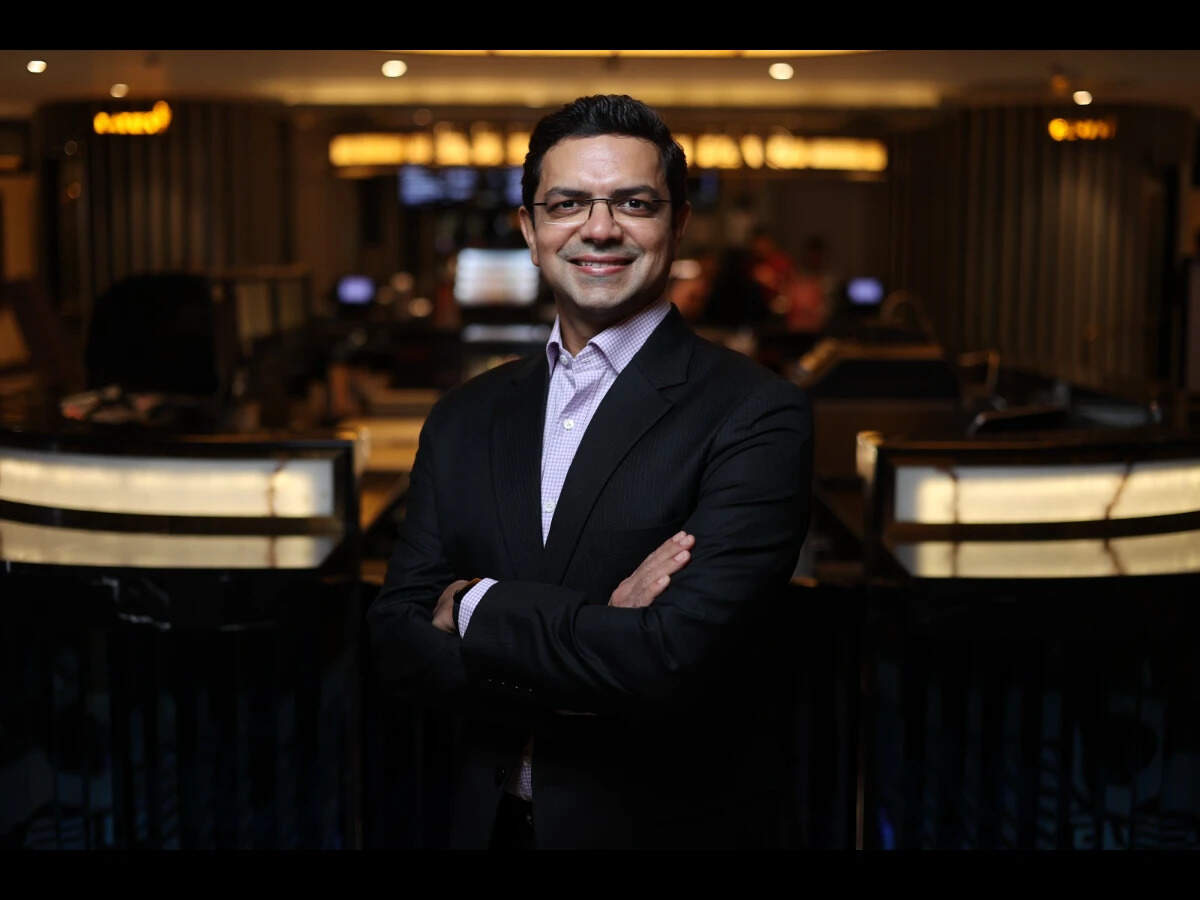
PVR INOX, India’s largest multiplex operator, plans to add 150 to 175 new screens every year from FY28, up from its planned 90 to 100 this year, with most of them coming through asset-light franchise and developer-funded models, CFO Gaurav Sharma said in an exclusive interview with ETCFO. The company is net debt free and completed its first-ever buyback of Rs 300 crore in September. “Multiplex penetration in India is still very low. Screens per million of population is the lowest, so there is a big headroom for growth,” Sharma said.
Sharma added that 20 to 25 percent of the new screens will be premium and special formats, while 35 to 40 percent will be in South India. The company also sees room for 800 to 1,000 “smart cinemas” in tier 3 and tier 4 towns over the next five years.
Edited excerpts:
Cinema is doing well again compared to a couple of years ago. What has fundamentally changed?
In the last 12 to 18 months the number of releases and movie-watching have both improved. Our cost discipline, asset-light expansion and capital allocation, combined with better revenue, have delivered a strong margin. Cash flow is what matters most for any business, and we have eliminated debt completely.
The next few months look strong too. Shah Rukh Khan has King in December, Ramayana is coming next week, and then there are Avengers and Ranbir Kapoor’s Love and War.
Where do you want to expand over the next two to three years, in terms of geography and format?
Today we have nearly 1,800 screens. India has about 9,000 to 10,000 screens in total, and multiplex screens are only 45 to 50 percent of that. Growth will come from the metros and the top cities, and also from the next 300 towns in tier 3 and tier 4 markets. We are in metros and also in places like Leh, Ladakh and Rampur.
The strategy has two prongs. In bigger cities such as Delhi, Gurgaon, Noida, Mumbai and Bangalore, we will go for premiumisation, with differentiated special formats where the consumer profile suits it. For tier 3 and tier 4 markets we have a separate product called smart cinemas, aimed at the value-conscious consumer. Ticket pricing, F&B pricing, capex and operating costs are all leaner there. In the next five years I see a market opportunity of about 800 to 1,000 screens for smart cinemas.
About 20 to 25 percent of our new screens will be premium and special formats. South India will be a priority, with 35 to 40 percent of new screens. Karnataka and Kerala are very promising, and we opened Nayanam in Kochi recently. We will also add more in Coimbatore, Pondicherry, Hyderabad and Andhra Pradesh. These markets are dominated by single screens, and regional films do big numbers there, but the multiplex share of box office is small. South is already our biggest region, but there is room to penetrate further.
How many screens do you plan to add each year?
This financial year we will open 90 to 100 screens. From next financial year onwards we expect 150 to 175 new screens every year. With our scale, a strong balance sheet and cash flow, and the asset-light franchise strategy, we hope to sustain this in the medium term and a large part of that will come from the franchise model and smart cinemas.
We have opened only three smart cinemas this year. Depending on how they perform and how the market responds, we will add more.
What do the financials look like for franchise cinemas versus the ones you own and operate?
Franchise is fairly new, something we have done in the last 12 to 18 months. Of our 1,800 screens, only about 71 to 72 are franchise screens. Most of the new screens we add are under franchise or other asset-light structures. In a franchise, the franchisee owns the cinema and we operate it with our branding, systems and processes. We earn a management fee, which is a revenue share arrangement.
For cinemas where we invest ourselves, or invest along with a developer, we run a robust feasibility process. The key metric is payback on our capital, which is between three and a half and four years, with a cinema-level EBITDA margin of 20 percent plus. These numbers change depending on where the cinema is.
What does your capex look like for this year and next?
We are doing more capital-light cinemas, where our share of capital is smaller and the developer or franchisee contributes the rest. So we can open the same number of screens or more with less capex. This year we will open around 100 screens with about Rs 300 crore of capex. Next year it will be around Rs 350 crore for maybe 150 screens. In the medium term, our annual capex will be between Rs 330 crore and Rs 360 crore.
Consolidation has been happening in the industry. Are you looking at acquisitions?
Growth is our number one priority, and right now it is coming from organic expansion, new screens in new and existing locations. We are very selective on M&A. We will evaluate any value-adding opportunity that comes up, but we don’t see anything specific at the moment. We are the largest multiplex operator, so for any new location we are automatically the preferred operator for the landlord or mall owner.
Premiumisation is clearly growing and ticket prices have gone up. What new experiences are you bringing to the premium markets?
We are the first to bring any new format to India. Of the 35 to 36 IMAX cinemas in the country, 25 to 26 are ours. We brought ICE, the immersive cinematic experience, to Delhi and Gurgaon. Today we have IMAX, 4DX, PXL, ICE, MX4D and BigPix as special formats.
At the very top end we have Director’s Cut, which has full recliner seats, service at the seat, a butler and a full dining experience. There is also Insignia, which is full-class cinema. These are for super-premium consumers in pockets where people are more affluent and willing to pay for a better experience. We will keep adding them in the top metros and in affluent areas of other cities.
Are you using AI in the finance function, and is the return on investment visible?
There is a lot of opportunity in functions like finance, accounts, legal and secretarial, and there are multiple use cases. We have started using it. At the enterprise level we have partnered with one of the top IT consulting companies in the country and started pilots. We have identified use cases across the organisation, including finance, operations, programming, IT and marketing. Based on how the pilots go, we will select use cases to scale.
Some of it is already live. Scheduling of films and ticket pricing are now fully AI-driven. We use AI for consumer segmentation and marketing. Our customer experience runs through an AI chatbot called MJ, and every consumer query goes through it. We have started adopting it in finance, accounts, legal and secretarial too, and we will scale up those use cases once the pilots succeed.
On returns, I think it is a longer-term approach. We don’t want to be short-sighted and ask for immediate ROI. We have allocated capital for AI, and in the medium to long term it will give benefits, measurable in cost savings and in productivity, responsiveness and accuracy. People’s roles will become more about reviewing than creating basic outputs.