



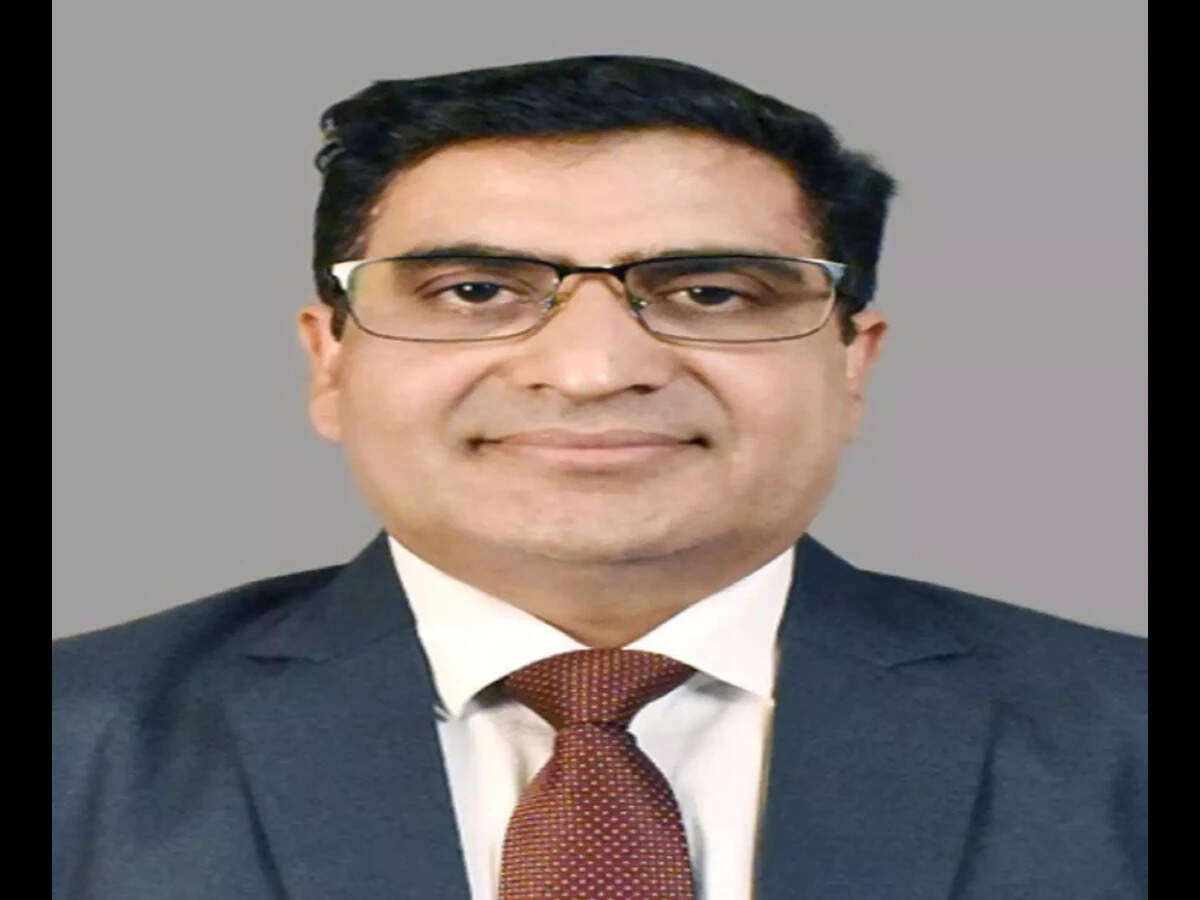
Waaree Renewable Technologies Ltd (WRTL), the EPC arm of the Waaree Group, is chasing about 9 GW of overseas solar EPC opportunities, mostly in the Middle East, with projects expected to be executed 18 to 24 months from now, CFO Manmohan Sharma said. The company is in bilateral discussions and bidding for EPC work, and says it has factored the ongoing West Asia conflict into its planning. Domestically, it is tracking a pipeline of about 25 GW.
In an interview, Sharma also spoke, the rising demand for battery energy storage systems (BESS),, the O&M business, acquisition debt and capex, and the impact of rising commodity prices on project costs.
Edited excerpts:
What revenue growth can WRTL achieve for the rest of the year and beyond, given your order book, pipeline and the acquisition?
Manmohan Sharma: We are progressing well in both verticals: solar EPC, which includes BESS, and T&D, our newly acquired subsidiary. The second quarter is the full-fledged consolidation of the numbers along with Associated Power Structures, and we achieved ₹1,057 crore of revenue. The order book we are carrying is ₹5,500 crore: ₹3,300 crore from solar EPC and ₹2,200 crore from T&D. That will get executed over the next few quarters. We are also actively chasing an order pipeline of around 25 GW domestically and around 9 GW internationally for solar EPC. The order book we carry plus the pipeline likely to convert into firm orders over the next quarter or few quarters will give full visibility of revenue for this company in the coming years.
Last year we did ₹3,300 crore in WRTL on its own, from the EPC business, and around ₹2,000 crore came from Associated Power Structures, so together about ₹5,300 crore. In the first half we have already achieved ₹1,982 crore. With two quarters left and the existing order book, that gives good visibility.
The PAT margin in Q2 has fallen to 7.7% from 15% last year. What changes in the margin profile now that the two businesses are combined?
Manmohan Sharma: Compared to our existing EPC business, the T&D business carries a lower margin profile. Therefore the combined [EBITDA] margin has come down to 15% this quarter. But by way of integration, expansion at Associated Power Structures, and the way we are executing EPC orders, BESS has also opened up a new space for us.
There are certain fixed expenses, such as depreciation, that will continue to come. And we did acquisition financing while acquiring this company, so we borrowed some money, and that interest and depreciation is additional to this. It will improve over a period of time. If you have higher revenue and margin, then definitely it will help improve the bottom line.
All this put together, we expect the margin should improve, including for the T&D business, because of this integration and expansion of its existing activity.
Are you seeing cost pressure in sourcing raw materials and if yes, what is driving that increase?
Manmohan Sharma: The majority sourcing is through the open market. Every commodity price is moving up, and so is procurement cost. Different items have moved differently, but overall, 5 to 10 percent is definitely the increase across all kinds of items. That is built into our costing, because we know when approaching new customers how much the price is likely to escalate in the future.
For the increase currency may be a factor, along with the existing price escalation. Ours is fully domestic: we are not importing anything directly for customers.
Other expenses have also gone up significantly to ₹55 crore this quarter from ₹12 odd crore last year. What led to that?
Manmohan Sharma: This increase is in line with our budget and estimate. It looks larger because the revenue we expected from solar EPC was not achieved in this quarter. On a higher revenue scale, you would see these numbers are in line with our estimates. We won around 1.7 GW of solar EPC orders during this quarter, which is a good strength. The unexecuted solar order book of ₹3,300 crore has significantly improved and is going to get executed, and we have an order pipeline in bilateral discussion with customers, some of which will convert into firm orders in the coming quarters.
The investor presentation focused on international expansion. Which markets are you scanning to enter, and with what offering?
Manmohan Sharma: The overseas pipeline we are following is around 9 GW of solar EPC. Mostly it is in the Middle East. We are actively bidding and are in bilateral discussions. Once we get some news, we will announce it.
With the conflict in West Asia going on, has it caused any increase in costs or disruption to this expansion?
Manmohan Sharma: The developers there are also aware of what is happening, because they have more ground reality than us. These bids are to be executed maybe 18-24 months from now. The groundwork is going on, and keeping in mind the ongoing situation it has been a well-thought-out process.
How is the execution pace looking for the T&D businesses?
Manmohan Sharma: The T&D business will also add to its order book in the coming quarter. We are also expanding its current capacity from 1,08,000 metric tonnes for galvanisation and processing of T&D material and making it double. In the next few quarters that capacity addition will come, and then we will have more capability to take new orders from the T&D space.
What is the update on BESS projects and how much execution of its projects is planned in the pipeline?
Manmohan Sharma: This space is very interesting and will open up a lot of opportunities for WRTL. Because of the government’s grid stability requirement, more and more BESS enquiries are coming up. Developers now want to add BESS to plain solar, so when we receive an enquiry, or when we finalise an order, we are getting BESS as well. In the recent orders also we are doing BESS. From the ₹3,300 crore solar order book, around ₹200 crore, is BESS EPC orders.
What is the revenue mix between EPC and T&D right now?
Manmohan Sharma: For this quarter it is around 55 to 60 percent from T&D. This is one quarter where EPC did not contribute in a great sense. In the coming quarters, with our order book, EPC will also contribute to a great extent. It is difficult to give any kind of number, because how much comes from T&D or EPC is difficult to predict immediately.
WRTL has also spoken about expanding O&M. What does that look like?
Manmohan Sharma: Over the last two quarters we have added around 400 to 500 MW. Earlier we were speaking of 700 to 800 MW of O&M, and now it has reached 1.5 GW. Slowly we are also providing technical support to the existing plants in the country, to build a bigger O&M portfolio. Some of the orders we are completing already come with O&M contracts with us, and those will get added. It is a good revenue-generating scheme for the company, along with the IPP assets we own. They contribute not in percentage terms, but in absolute numbers.
What are your capex needs for the next two to three years?
Manmohan Sharma: We are an asset-light business. For the EPC business, including BESS, we need not have any kind of capex. For the IPP projects we are developing there may be a capex requirement, and that is taken care of. For T&D, when we expand, we will fund it through debt and internal accruals to some extent.
What debt have you taken on, and what is the plan for repayment and further borrowing?
Manmohan Sharma: For the acquisition of the T & D business we took a loan of ₹1,225 crore. We do not have any immediate plan to borrow, except for T & D business expansion: of the total capex requirement of maybe ₹350 crore, something like 75 percent may come there. Overall, the intent of the company is not to have more and more debt, because we have never added any debt in the past. Soon we will have a plan to streamline this. In this quarter ₹36 crore has gone to finance cost, and the majority of that is acquisition financing interest.