



Dear Readers,
A storm of natural disasters is hovering over us. Maharashtra has declared drought in half its districts, raising the prospect of a wider water, energy and food crisis. The situation is serious enough for some to comment that India may soon need a Pani Express, or water train, like a neighbouring country. The buildup of a super El Nino, the biggest on record, is fuelling major concerns.
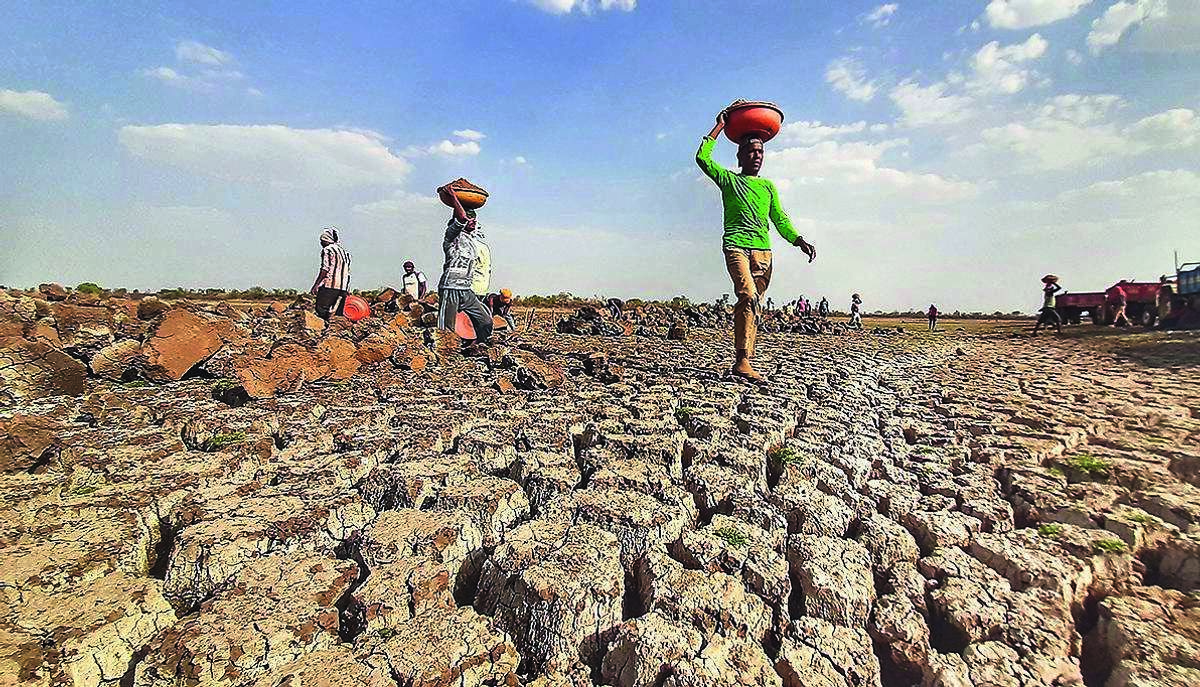
Readers/Viewers, natural calamities are beyond our control. Wasting water is not. There is little any individual can do about the monsoon, but there is plenty that can be done about consumption. Saving water is no longer merely an environmental message. It is becoming an economic necessity.
The same logic applies to money. The Reserve Bank of India has raised rates by 25 basis points this week, but more significant than the increase itself was the Governor’s message that rate cuts are no longer on the table and that rates are likely either to remain where they are or move higher. The era of cheap money is therefore coming to an end, and that matters because the cost of capital does not stay inside the finance department. It eventually reaches the factory floor.
I wrote about this in September, but the argument has become even more relevant since then.
Read Here: India Inc needs to rethink the cost of capital
The concern is no longer simply higher interest rates. The possible effects of the super El Nino could make the situation considerably worse. A poor monsoon can push up food prices, higher oil prices can worsen India’s import bill and inflation, and persistent inflation can leave central banks with less room to cut rates. A weather shock can thus become an inflation shock, which becomes a monetary-policy shock and eventually a corporate-financing problem.

Global capital: available, but expensive
I often think about how much of modern life has been built on global capital. Swiggy could not deliver dinner to your doorstep without investors financing warehouses, technology and delivery networks. E-commerce and quick commerce would not have built their enormous logistics networks without years of external funding. Even the car waiting outside your house after a few taps on a phone is, in a less obvious way, a product of capital.
We have become so used to these conveniences that we rarely stop to think about the money that made them possible. For emerging economies, foreign capital is particularly important. India has opened several sectors to foreign direct investment, in some cases up to 100%, because domestic savings alone cannot finance every investment opportunity.
The past decade also produced an expansion in the forms of capital available to companies, from private equity and venture capital to alternative investment funds and private credit. Much of India’s start-up and fintech boom was built on this money.
The problem is not that this capital has vanished. It is that investors now want more for taking the same risk.
When US government bonds offer attractive risk-free returns, an investor has less reason to accept a thin premium for investing in an Indian company. India may remain an attractive growth market, but investors will increasingly ask whether the return is sufficient compensation for currency, geopolitical and business risk.
That, to me, is the subtle change taking place in the global capital market. Money is still available, but the price of money, and the price of risk, has changed.

Why is capital becoming expensive?
For much of the past decade, companies became accustomed to relatively stable financing conditions. That assumption has now been disturbed by war, inflation, energy shocks and geopolitical fragmentation. What began with the war in Ukraine was followed by the conflict in Gaza and then the escalation involving Israel and Iran, while disruptions around the Strait of Hormuz have added another layer of risk to oil, LPG and global trade.
I remember travelling to western Maharashtra recently, and it took me some time to refuel my car. It may sound like a small personal experience, but such disruptions are a reminder of how quickly a global energy shock can reach ordinary businesses and consumers. India is particularly vulnerable because it imports most of its crude oil.
A higher crude bill puts pressure on the current account and the rupee, while higher fuel costs feed into inflation. If this happens while global bond yields are high, India faces an awkward combination: imported inflation and expensive capital at the same time.
There is another unusual competitor for global capital: artificial intelligence. A huge amount of investment is being directed towards chips, data centres, computing capacity and AI infrastructure, while the eventual returns remain uncertain. Either way, the allocation of global capital is changing, and that is something Indian companies will have to factor into their plans.

The corporate impact
India has recorded credit growth of 19% in the past month. At first glance, that looks reassuring, but there are various layers to this number. Indian companies have not expanded aggressively despite a long period of relatively stable rates. In my last editorial note, CFOs should be ready for the storm, I had mentioned how industry has grown in pockets, but the broad-based private capex cycle has remained less impressive than many expected.
This raises an uncomfortable question: why did companies not invest more when money was cheap? Those that built capacity and strengthened their balance sheets during the easy-money period are now better placed, while others will have to make investment decisions in a more expensive financing environment.
There is an important distinction between credit growth and productive investment. A bank can grow its loan book without a corresponding boom in factories because credit can fund working capital, refinancing, housing and consumption. The more useful question is where the credit is going and whether it is creating productive capacity.
Private investors are also becoming more selective. Start-ups and fintechs are finding that a large addressable market is no longer enough. Investors want a path to cash generation, profitability and returns. That is a significant change from the previous cycle.

India remains attractive
Yet it would be wrong to confuse expensive capital with the end of India’s investment story. India remains one of the world’s fastest-growing large economies. Credit is growing strongly, consumption remains resilient, commercial vehicles and electric vehicles are seeing investment, and financial services continue to attract interest. FIIs and FPIs may be negative in the short term, but the long-term India thesis remains intact.
The deal pipeline is another sign that capital has not disappeared. According to Dealogic, India has recorded $130.571 billion of M&A transactions across 1,019 deals year-to-date. Indian corporates are also investing heavily abroad.
Capital is becoming selective rather than scarce. Strong companies and strategic assets can still attract large cheques. The harder money to find will be capital for companies that need repeated funding merely to sustain growth.
But this brings me back to the question I have been asking about Indian industry: what made companies stop or go slow on expansion when capital was cheap, stable and lenders were open? Those that made the capital formation during this period can still think of expanding, but companies that want to expand now need a bigger stomach and appetite because the cost of capital has gone up.
The hidden problem: working capital
There is another warning sign that, to me, deserves greater attention. An investor working with MSMEs told me that liquidity pressure among corporates was visible even before the RBI’s latest rate move, as companies had started delaying payments.
When a large company delays a payment, it effectively transfers its financing requirement to its supplier. The supplier then needs more working capital from a bank, NBFC or its own cash reserves, and if that supplier is an MSME, the consequences can be much more immediate.

A 30-day delay for a large corporation can therefore become a serious liquidity problem for a small business. The large company may simply be managing its treasury, but the MSME may be deciding whether it has enough money to pay salaries, suppliers and bank instalments.
This is how financial tightening travels through an economy. A company does not necessarily have to shut a factory when capital becomes expensive. It can first stretch supplier payments, reduce inventory, postpone hiring, delay capex and refinance existing debt. The headline economic data may remain healthy while the stress quietly moves through corporate balance sheets.
Infrastructure may remain relatively protected because government spending continues to support it, but manufacturing and other capital-intensive sectors could be more exposed if private investment weakens.
India’s growth story therefore has an important qualification. A 7% economy driven by consumption and government expenditure is one thing; a 7% economy in which private companies are investing aggressively, building factories, hiring workers and expanding capacity is another. The second is what India needs if today’s growth is to become tomorrow’s productive capacity.
The era of cheap money helped companies experiment, borrow and expand. The era of expensive money will force them to answer a much simpler question: Will the return on this investment be higher than the cost of capital?
That may be a better question for corporate India, but it is also a much harder one. Global capital is not leaving. It is simply becoming more demanding about where it goes.
Please share your feedback, suggestions if any. You can reach me on amol.dethe@timesinternet.in
As usual, I am adding here the top 5 stories of the week, trust you will find them meaningful.
1. GST Council 57th Meeting: Faster Refunds, ITC, Registration, Lower Penalties — All Key Announcements Explained
2. GST Council highlights: What FM Sitharaman announced for India Inc
3. RBI rate hike: India Inc CFOs see limited impact on growth, flags crude, rupee risks
4. GST Council scraps arrest power of tax officers, raises prosecution threshold to Rs 5 crore
5. ICAI advances Ind AS 118 work, eyes Schedule III revamp
Happy Reading
Amol Dethe,
Editor,
ETCFO
(Editor’s note is a column written by Amol Dethe, Editor, ETCFO. Click here to read more of his articles exploring several buzzing topics)